
Food grade paper cups are widely used for serving coffee, tea, water, juice and other beverages in cafés, restaurants, hotels, catering businesses and takeaway services.
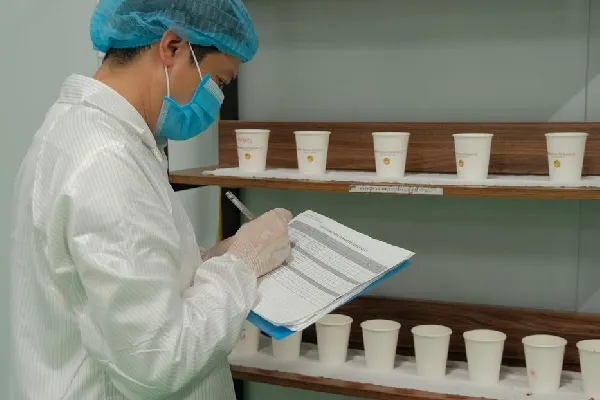
For food and beverage packaging, choosing a suitable paper cup involves more than selecting the cup size or appearance. Businesses should consider the paper material, inner coating, intended beverage application, manufacturing quality and applicable food-contact requirements.
Food grade paper cups can be supplied in different sizes, structures and designs, including plain cups, Kraft paper cups, single-wall cups, double-wall cups and custom printed paper cups.
For businesses purchasing paper cups in commercial quantities, selecting a reliable manufacturer or supplier is an important part of maintaining consistent packaging quality.
Food grade paper cups are paper cups manufactured using materials intended for contact with food or beverages.
The cup typically consists of a paperboard structure combined with an inner barrier or coating that helps prevent liquid from directly penetrating the paper.
Depending on the product, the coating may use different materials and specifications.
Food grade paper cups can be used for:
Coffee
Tea
Hot chocolate
Drinking water
Juice
Soft drinks
Cold beverages
Takeaway drinks
Catering
Events and foodservice
The exact suitability of a paper cup depends on its material specification and intended application. Businesses should obtain product specifications from the manufacturer rather than assuming that every paper cup is suitable for every type of food or beverage.
Paper cups are designed to come into direct contact with beverages.
Therefore, the materials used in the cup should be appropriate for the intended food-contact application.
Important factors can include:
Paperboard quality
Inner coating
Printing ink
Adhesives
Manufacturing process
Storage conditions
Intended beverage temperature
Applicable food-contact requirements
A food grade paper cup should be manufactured according to appropriate specifications for its intended use.
For commercial buyers, asking the supplier for technical documentation can help verify whether the product is suitable for the required application.
Paper cups are generally manufactured using food-contact paperboard combined with a liquid-resistant inner layer.
Depending on the product specification, different materials can be used for the barrier coating.
Common considerations include:
Paperboard
PE coating
Water-based coatings
Other specialized barrier coatings
The choice of material can affect:
Liquid resistance
Heat resistance
Cup rigidity
Printing performance
Shelf life
Recycling characteristics
Intended beverage application
Businesses should always confirm the actual material specification with the manufacturer.
The inner coating plays an important role in paper cup performance.
Without an appropriate barrier, liquid can penetrate the paper and weaken the cup.
A suitable coating can help:
Prevent leakage
Protect the paper structure
Improve liquid resistance
Maintain cup integrity
Support hot or cold beverage applications
Different coatings may be designed for different applications.
For this reason, businesses should not select a cup based solely on appearance. The coating and intended use should also be considered.
PE-coated paper cups are commonly used for beverage applications.
The PE layer can provide a barrier between the beverage and the paper structure.
PE-coated cups may be designed for:
Hot beverages
Cold beverages
Takeaway drinks
Foodservice applications
However, the exact specification and intended application should be confirmed with the manufacturer.
PaperGCO also provides different paper cup formats, including 1PE and 2PE-related products.
Food grade paper cups can be manufactured for hot beverage applications.
Common uses include:
Coffee
Tea
Hot chocolate
Milk-based drinks
Other hot takeaway beverages
For hot drinks, businesses should consider:
Temperature
Cup structure
Paper specification
Inner coating
Insulation
Lid compatibility
Customer handling
Single-wall cups may be used with an external sleeve, while double-wall cups provide an additional paper layer for improved insulation and handling.
Food grade paper cups can also be used for cold beverages when the product has been designed for that application.
Examples include:
Water
Juice
Soft drinks
Iced coffee
Other cold beverages
Cold beverages may create condensation on the outside of the cup. The appropriate paper and coating specification can help maintain cup performance during use.
Businesses should confirm whether a particular paper cup is intended for hot drinks, cold drinks or both.
Single-wall food grade paper cups use one primary paper wall combined with an appropriate barrier coating.
They can be suitable for businesses looking for:
Lightweight cups
Cost-effective packaging
Standard takeaway applications
Flexible branding options
For hot beverages, an additional paper sleeve can be used when greater hand protection is required.
Double-wall food grade paper cups contain an additional outer paper layer.
This construction can provide:
Better insulation
Improved rigidity
More comfortable handling
A premium appearance
Double-wall cups are particularly common for takeaway coffee and other hot beverages.
Businesses that require stronger insulation should compare single-wall and double-wall structures based on the intended beverage and customer experience.
Kraft paper cups can also be manufactured for food and beverage applications when the materials and coating are appropriate for food contact.
Kraft cups are popular because of their natural brown appearance.
They can be used for:
Coffee
Tea
Hot beverages
Takeaway drinks
Café packaging
Kraft paper cups can be supplied as plain cups or customized with brand printing.
Businesses should distinguish between the natural appearance of a cup and its actual food-contact specification. A Kraft-colored cup is not automatically food grade simply because it looks like natural paper.
White paper cups are another common option for food and beverage packaging.
The clean white surface provides a flexible background for:
Logos
Brand colors
Product information
Promotional designs
Custom illustrations
White paper cups are widely used by cafés, restaurants, beverage companies and foodservice businesses.
Businesses can use custom printed food grade paper cups to combine beverage packaging with brand communication.
Depending on the printing specification, designs can include:
Company logo
Brand name
Slogan
Contact information
Website
QR code
Promotional messages
Illustrations
Seasonal campaigns
For custom printed cups, the printing ink and manufacturing process should also be appropriate for the intended food-contact product configuration.
Food grade paper cups are available in different sizes.
Common sizes include:
4oz
6oz
8oz
10oz
12oz
16oz
22oz
The available sizes depend on the manufacturer's production range.
For cafés and coffee shops, 8oz, 12oz and 16oz can be useful sizes for different beverage portions.
Businesses should also confirm:
Actual capacity
Cup height
Top diameter
Bottom diameter
Lid compatibility
Packaging dimensions
12oz paper cups are commonly suitable for medium-sized takeaway beverages.
Potential applications include:
Coffee
Latte
Cappuccino
Tea
Hot chocolate
Other takeaway beverages
The cup should be paired with a compatible lid when used for takeaway service.
16oz paper cups provide a larger capacity for takeaway beverages.
They can be suitable for:
Large coffee
Latte
Milk-based drinks
Tea
Cold beverages, depending on specifications
For coffee shops, 12oz and 16oz can be useful core sizes for takeaway menus.
Coffee shops are among the most common users of food grade paper cups.
A coffee shop may require:
Different cup sizes
Hot beverage cups
Cold beverage cups
Single-wall cups
Double-wall cups
Compatible lids
Custom printing
Regular wholesale supply
Packaging consistency becomes increasingly important for cafés and coffee chains because cups are used every day and directly interact with customers.
Restaurants can use paper cups for:
Takeaway coffee
Tea
Water
Juice
Soft drinks
Catering
Delivery
For restaurants, the cup should match the beverage type and service model.
For delivery and takeaway, businesses should also consider lid fit and packaging stability.
Catering companies and event organizers may require large quantities of paper cups within a short period.
Important considerations include:
Number of guests
Beverage types
Cup sizes
Hot or cold applications
Lid requirements
Delivery schedule
Storage
Quantity of backup stock
For large events, purchasing from a supplier with reliable production capacity can help reduce the risk of packaging shortages.
Food-contact safety is an important consideration when selecting paper cups.
Businesses should ask suppliers about the product's intended food-contact application and available technical documentation.
Depending on the target market, buyers may need to consider:
Food-contact regulations
Material declarations
Product specifications
Migration testing
Applicable certifications
Manufacturing controls
The specific requirements depend on the destination market and intended application.
For export orders, buyers should clearly communicate the target market to the manufacturer so the appropriate documentation and specifications can be reviewed.
No.
The term "paper cup" only describes the general product type. It does not automatically establish that a particular cup meets every food-contact requirement.
Food grade suitability depends on:
Paper material
Coating
Ink
Adhesives
Manufacturing process
Intended application
Applicable regulations
Businesses should request product documentation and confirm the intended use with the supplier.
Before purchasing large quantities, businesses can evaluate the product through several steps.
Ask the supplier for the paper and coating specifications.
Check whether the cup is designed for hot drinks, cold drinks or both.
Request relevant technical documentation or declarations where applicable.
For printed cups, confirm that the printing system is appropriate for the product.
Use actual beverages to test the cup before placing a large order.
Test the cup for leakage and structural stability.
Make sure the selected lid fits securely.
Paper cups should be stored according to the manufacturer's recommendations to protect product quality.
A reliable food grade paper cup supplier should provide clear information about materials, specifications and intended applications.
Before placing an order, consider:
Paper quality
Coating specification
Food-contact suitability
Available sizes
Cup structure
Printing capability
MOQ
Production capacity
Quality control
Samples
Lead time
Packaging
Delivery
For long-term supply, consistency is especially important.
A supplier that can maintain consistent dimensions, materials, printing and production quality can help businesses reduce packaging problems.
Buying directly from a food grade paper cup manufacturer can provide better control over specifications and customization.
A manufacturer may support:
Different cup sizes
Single-wall cups
Double-wall cups
Kraft cups
White cups
Custom printing
Large-volume production
Packaging customization
Long-term supply
For commercial buyers, direct communication with the manufacturer can also make it easier to clarify technical requirements.
Vietnam is an important manufacturing location for various food and beverage packaging products.
Businesses looking for food grade paper cups from Vietnam may work directly with manufacturers for domestic or export supply.
When evaluating a paper cup factory in Vietnam, buyers should consider:
Manufacturing capability
Production capacity
Material specifications
Quality control
Printing technology
Product range
MOQ
Lead time
Export experience
Packaging and logistics
For international orders, buyers should clearly specify the destination market and applicable requirements before production begins.
Wholesale food grade paper cups are suitable for businesses with regular or high-volume consumption.
Typical wholesale customers include:
Coffee shops
Café chains
Restaurants
Hotels
Catering companies
Beverage distributors
Foodservice suppliers
Retailers
When comparing wholesale suppliers, consider the total purchasing cost rather than only the unit price.
Factors such as product consistency, production lead time, packaging and delivery can significantly affect the actual cost of supply.
Bulk purchasing can be useful when a business has predictable consumption.
A simple estimate can be calculated using:
Daily consumption × operating days + safety stock = estimated order quantity
For example, a business using 2,000 cups per day and operating 30 days per month would normally require around 60,000 cups per month before additional safety stock.
Businesses should adjust the quantity according to seasonal demand, delivery schedules and available storage.
Food grade and environmental performance are two different considerations.
A cup can be suitable for food contact while still requiring specific waste-management considerations.
The environmental characteristics of a paper cup depend on:
Paper source
Coating
Printing
Manufacturing
Packaging
Transportation
Collection systems
Recycling infrastructure
Businesses should avoid making environmental claims without appropriate supporting information.
If recyclability, compostability or biodegradability is important to the brand, these characteristics should be verified against the actual product specification and relevant standards.
PaperGCO provides paper cups and F&B packaging solutions for cafés, coffee shops, restaurants, beverage brands, distributors and other commercial customers.
The product range includes different paper cup structures and related foodservice packaging.
Customers can explore:
Paper cups
Plain paper cups
Custom printed paper cups
Double-wall Kraft paper cups
1PE paper cups
Cold cups
Paper straws
Paper bowls
Paper plates
Paper bags
Paper Cups
Plain Paper Cups 12oz, 16oz and 22oz
Custom Printed Paper Cups
Double-Layer Kraft Paper Cups
1PE Paper Cups
2PE Cold Cups
Paper Straws
Paper Bowls
Paper Plates
Paper Bags
Food grade paper cups are paper cups manufactured using materials intended for contact with food or beverages. They typically use a paperboard structure combined with an appropriate liquid-resistant barrier or coating.
Food grade paper cups designed for hot beverages can be suitable for coffee. Buyers should confirm the manufacturer's specifications for temperature, coating and intended application.
No. A paper cup is not automatically suitable for every food-contact application. Material, coating, ink, adhesives, manufacturing processes and applicable requirements all need to be considered.
Food grade paper cups generally use food-contact paperboard with an inner barrier coating. Depending on the product, coatings may include PE or other barrier materials.
Yes, when the cup is specifically designed for hot beverage applications. The manufacturer should confirm the appropriate temperature range and product specification.
Yes, when the cup is designed for cold beverage applications. Businesses should check the manufacturer's specifications for liquid resistance and intended use.
Yes. Food grade paper cups can be custom printed with logos, brand names, artwork and promotional information, subject to the manufacturer's printing capabilities and product specifications.
Common sizes include 4oz, 6oz, 8oz, 10oz, 12oz, 16oz and 22oz. The exact sizes available depend on the manufacturer.
Yes. Wholesale food grade paper cups are commonly purchased by coffee shops, restaurants, hotels, catering companies, distributors and other foodservice businesses.
Yes. Businesses can source paper cups from manufacturers in Vietnam for domestic and export applications. Buyers should confirm materials, specifications, documentation, MOQ and production capacity before ordering.
Ask the supplier for product specifications and relevant food-contact documentation. Confirm the paper, coating, printing system, intended application and applicable requirements for the destination market.
Food grade refers primarily to suitability for food-contact applications, while environmental performance relates to factors such as materials, coating, recyclability, compostability and end-of-life management. These are separate characteristics.
Food grade paper cups are an important part of beverage packaging for cafés, coffee shops, restaurants, catering businesses, hotels and other foodservice operations.
Choosing the right product requires more than selecting a paper cup based on size or appearance. Businesses should evaluate the paper material, coating, intended beverage application, printing, cup structure and food-contact requirements.
For hot beverages, single-wall and double-wall structures provide different handling and insulation characteristics. Kraft and white paper cups offer different visual styles, while custom printing allows businesses to build their brand directly into the packaging.
For wholesale and export orders, buyers should work with a supplier or manufacturer that can provide clear specifications, consistent production quality and appropriate documentation for the intended market.
PaperGCO provides paper cups and related F&B packaging products for businesses looking for standard and customized foodservice packaging solutions.



VNtech Group Joint Stock Company
ĐKKD: 0109896881 do sở KH&ĐT HÀ NỘI cấp ngày: 24/01/2022
Đăng ký lần đầu, ngày 24 tháng 01 năm 2022.
Connect