
Choosing the right paper food container supplier is an important part of building a reliable food packaging supply chain.
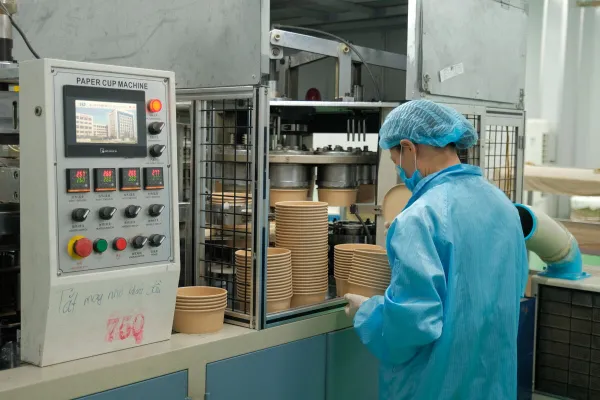
Restaurants, takeaway businesses, catering companies, food manufacturers, distributors, supermarkets, and food delivery brands all require packaging that can protect food while meeting practical, branding, cost, and sustainability requirements.
Paper food containers can be used for a wide range of applications, including takeaway meals, fried food, noodles, rice, pasta, salads, snacks, desserts, and other prepared foods.
However, choosing a supplier should involve more than comparing the lowest price.
A reliable paper food container supplier should provide consistent product quality, suitable food-contact materials, stable production, customization options, clear specifications, competitive lead times, and dependable supply.
This guide explains what businesses should know when sourcing paper food containers and how to evaluate suppliers for long-term cooperation.
A paper food container supplier provides paper-based containers and packaging solutions for food service and food-related businesses.
Depending on the supplier's capabilities, its product range may include:
Paper food containers
Paper bowls
Paper lunch boxes
Paper takeaway boxes
Paper trays
Paper cups
Paper-based food packaging
Custom printed food containers
Matching lids
Other disposable food packaging
Some suppliers manufacture products directly, while others source products from multiple factories.
For larger buyers, understanding whether a company is a direct manufacturer, trading company, or distributor can help determine the most suitable sourcing model.
Paper food containers can be used for many different types of food.
Common applications include:
Takeaway meals
Rice dishes
Noodles
Pasta
Fried food
Chicken
Burgers
Sandwiches
Salads
Desserts
Snacks
Fruits
Bakery products
Catering meals
Food delivery
The appropriate container depends on the food type, temperature, moisture, grease content, portion size, storage requirements, and transportation conditions.
A paper food container supplier may offer different packaging formats depending on customer requirements.
Paper takeaway containers are designed for restaurants, cafés, food shops, and delivery businesses.
They can be used for:
Rice meals
Noodles
Pasta
Fried food
Mixed meals
Prepared foods
A suitable takeaway container should provide sufficient strength and protection during transportation.
Paper bowls are suitable for liquid, semi-liquid, and solid foods.
They can be used for:
Soup
Noodles
Salad
Rice
Pasta
Desserts
Ice cream
Businesses can explore the dedicated Paper Bowl Manufacturer resource for more information about paper bowl production and customization.
Paper lunch boxes can be used for takeaway meals, catering, food delivery, and prepared foods.
They are often designed with folding structures that make them easy to transport and store.
Paper trays can be used for:
Fast food
Fried food
Snacks
Bakery products
Catering
Food service
Their open or semi-open structure can make them convenient for serving and presentation.
Paper food containers are generally made from food-grade paperboard or other fiber-based materials.
Depending on the application, additional coatings or barrier layers may be used to improve:
Moisture resistance
Grease resistance
Liquid resistance
Heat resistance
Structural performance
Common coating options can include PE, PLA, water-based coatings, and other specialized barrier technologies.
The appropriate material depends on the intended food application.
Businesses should request detailed material specifications from their supplier before placing large orders.
PE is a commonly used coating for paper food packaging.
It can provide protection against:
Moisture
Water
Grease
Liquid food
PE-coated paper containers can be suitable for many food applications.
However, businesses looking for sustainable packaging should evaluate the entire product structure, recycling infrastructure, and end-of-life options rather than focusing only on the paper component.
PLA is a plant-based bioplastic that can be used for certain food packaging applications.
It is often considered by businesses seeking alternatives to conventional plastic coatings.
However, PLA does not automatically mean that every product is compostable in every environment.
Businesses should verify the specific material structure, certifications, and applicable composting conditions before making environmental claims.
The demand for sustainable food packaging continues to grow as businesses look for alternatives to conventional plastic packaging.
Eco-friendly paper food containers may use:
Responsibly sourced paperboard
Fiber-based materials
Alternative coatings
Reduced-material designs
Recyclable structures
Compostable materials where appropriate
However, sustainability should be evaluated based on the complete packaging system.
Important considerations include:
Material composition
Manufacturing
Transportation
Product durability
Recyclability
Compostability
Local waste-management infrastructure
For a broader introduction, see Eco-Friendly Packaging.
Many food brands require packaging customized with their own branding.
A custom paper food container supplier may provide:
Custom sizes
Custom shapes
Custom printing
Custom colors
Custom coatings
Custom packaging
Custom structural designs
Custom packaging can help restaurants and food brands create a consistent visual identity across their takeaway products.
Custom printed food containers can include:
Company logos
Brand colors
Product names
Promotional messages
Illustrations
Patterns
QR codes
Contact information
Marketing campaigns
For food businesses, the packaging itself can become a valuable branding channel.
Before mass production, buyers should confirm:
Artwork specifications
Printing method
Number of colors
Print area
Color requirements
Proofing procedure
Food-contact requirements
Paper food containers are available in different sizes and capacities.
The appropriate size depends on:
Portion size
Food type
Food density
Presentation
Storage
Delivery requirements
A supplier should provide accurate product dimensions and capacity specifications.
For custom orders, buyers should confirm whether the supplier can manufacture non-standard sizes.
Many takeaway businesses require containers with matching lids.
A suitable lid can help improve:
Food protection
Leak resistance
Transportation
Stacking
Convenience
The lid should be compatible with the container and suitable for the intended food application.
For hot or liquid foods, businesses should pay particular attention to sealing performance and temperature resistance.
Food delivery creates additional packaging requirements.
Containers used for delivery should provide:
Structural strength
Leak resistance
Grease resistance
Appropriate heat resistance
Secure closure
Stable stacking
The container should also maintain its shape during transportation.
Poor packaging can result in leaks, damaged food, and a negative customer experience.
Hot food requires appropriate paperboard and barrier performance.
Typical applications include:
Soup
Noodles
Rice
Curry
Pasta
Fried food
Hot prepared meals
The supplier should recommend materials based on food temperature, moisture, grease content, and expected holding time.
Paper containers can also be used for cold foods such as:
Salads
Fruits
Desserts
Cold noodles
Yogurt
Prepared meals
Although cold food generally places fewer thermal demands on the packaging, moisture and condensation can still affect paper performance.
Depending on the product, manufacturing may involve several stages.
The paperboard is selected according to:
Product size
Food application
Strength
Coating
Printing
Production requirements
Custom designs are printed onto the paperboard when branding is required.
The printed paperboard is cut into the required shape.
The cut material is folded, formed, or sealed into the final container structure.
Specific areas are sealed to create the required structural and leak-resistant performance.
Products may be inspected for:
Dimensions
Printing quality
Shape
Sealing
Coating
Leakage
Packaging
Finished products are packed into inner packs and cartons for storage and transportation.
Businesses should evaluate several factors before selecting a supplier.
Check:
Paperboard quality
Thickness
Coating
Structural strength
Sealing
Printing
Ask the supplier for relevant material and food-contact documentation for the target market.
A supplier with a broader product range may make it easier to consolidate packaging purchases.
For example, a buyer may source:
Paper cups
Paper bowls
Food containers
Paper straws
Other F&B packaging
from the same supplier.
Check whether the supplier can provide:
Custom sizes
Custom shapes
Custom printing
Custom packaging
OEM solutions
Minimum order quantity can have a major impact on purchasing decisions.
Smaller businesses may prefer suppliers that support lower MOQs, while larger brands may prioritize production capacity and unit cost.
For wholesale and recurring orders, production capacity is critical.
A supplier should be able to maintain consistent supply as demand increases.
Production and shipping lead times should be compatible with the buyer's inventory planning.
Ask how the supplier controls:
Raw materials
Printing
Dimensions
Forming
Sealing
Finished products
Packing
International buyers should consider whether the supplier has experience with:
Export packaging
Shipping documents
International logistics
Product specifications
Destination-market requirements
A supplier and manufacturer are not always the same type of business.
A manufacturer typically produces the packaging directly.
A supplier may manufacture products itself or source them from other factories.
Working directly with a manufacturer may offer advantages such as:
Direct communication
Greater customization
Production visibility
Product development
Better control over specifications
However, a supplier with multiple manufacturing sources may offer a broader product range and greater sourcing flexibility.
The best model depends on the buyer's requirements.
Wholesale buyers typically need:
Competitive pricing
Consistent quality
Large production capacity
Stable supply
Repeat-order support
Efficient packaging
Export capability
A reliable wholesale supplier should be able to provide consistent specifications across multiple production batches.
OEM solutions allow brands to develop packaging according to their own requirements.
OEM paper food containers may include:
Custom dimensions
Custom printing
Custom structures
Custom coatings
Custom lids
Custom packaging
OEM is particularly useful for:
Restaurant chains
Food manufacturers
Large food brands
Distributors
Franchise businesses
Restaurants often require different packaging formats for different menu items.
For example:
Small containers for snacks
Medium containers for meals
Bowls for noodles
Larger containers for family meals
Using a supplier that can provide multiple packaging formats can simplify purchasing and inventory management.
Catering businesses often purchase large quantities for events and corporate functions.
Important considerations include:
Bulk availability
Consistent quality
Storage efficiency
Transportation
Custom printing
Delivery schedules
A stable supplier can help catering businesses manage fluctuating demand.
Food delivery brands need packaging designed for transportation.
Important characteristics include:
Secure closure
Leak resistance
Structural strength
Heat resistance
Grease resistance
Stackability
The packaging should help maintain the food's appearance and quality from the restaurant to the customer.
Paper food containers can be combined with other paper-based products to create a broader sustainable packaging system.
A business may source:
Paper cups
Paper bowls
Paper straws
Paper food containers
Paper plates
Kraft bags
For businesses researching sustainable beverage packaging, Eco-Friendly Paper Cups provides additional information about paper cup materials and applications.
Businesses interested in biodegradable alternatives can also explore Biodegradable Paper Cups.
For information about beverage packaging dimensions, see Best Paper Cup Sizes for Coffee Shops.
PaperGCO provides paper-based food and beverage packaging solutions for businesses looking for customizable and scalable packaging.
Its product focus can support different F&B applications, including:
Paper cups
Paper bowls
Paper food containers
Paper straws
Custom printed paper packaging
For businesses looking for a paper food container supplier, PaperGCO can support discussions around materials, dimensions, printing, packaging specifications, and production requirements.
Explore the PaperGCO website for more information about paper-based food and beverage packaging.
International customers can also visit the PaperGCO English website.
Before placing a large order, buyers should ask:
What paperboard is used?
What coating is available?
Is the material suitable for food contact?
What sizes are available?
Can custom sizes be produced?
Can the containers be custom printed?
What is the MOQ?
What is the production lead time?
What is the production capacity?
Are matching lids available?
What quality-control procedures are used?
Can samples be provided?
What certifications are available?
Does the supplier support export orders?
Getting clear answers to these questions can reduce sourcing risks and help businesses select a supplier that matches their long-term requirements.
A paper food container supplier provides paper-based food packaging products for restaurants, food brands, catering companies, takeaway businesses, distributors, and other food service customers. Depending on the company, the supplier may manufacture products directly or source them from manufacturing partners.
Paper food containers can be used for takeaway meals, rice, noodles, pasta, fried food, salads, desserts, snacks, bakery products, catering meals, and food delivery.
Yes. Many suppliers offer custom printing with logos, brand colors, product information, promotional messages, illustrations, QR codes, and other branding elements.
Paper food containers are generally made from food-grade paperboard or fiber-based materials. Depending on the application, coatings such as PE, PLA, water-based coatings, or other barrier materials may be used.
Paper food containers can be part of a more sustainable packaging strategy, but their environmental performance depends on the complete product structure, coatings, manufacturing process, recyclability, compostability, transportation, and local waste-management systems.
Yes. Paper food containers can be designed for hot foods such as soup, noodles, rice, curry, pasta, and other prepared meals. The paperboard and coating should be selected according to the food temperature and application.
Yes. Paper food containers are widely used for takeaway and food delivery. Buyers should evaluate leak resistance, structural strength, heat resistance, grease resistance, closure security, and stacking performance.
A manufacturer directly produces the packaging, while a supplier may manufacture products itself or source them from other factories. A supplier may therefore provide a broader range of products, while a direct manufacturer may provide greater control over production and customization.
Important factors include product quality, food-contact compliance, materials, coatings, customization, MOQ, production capacity, lead time, quality control, certifications, export experience, pricing, and long-term supply reliability.
PaperGCO focuses on paper-based F&B packaging solutions and can support businesses evaluating paper food containers, materials, dimensions, printing, packaging specifications, and production requirements.
Selecting the right paper food container supplier is an important step for restaurants, food brands, catering companies, distributors, and takeaway businesses.
A reliable supplier should provide more than competitive pricing.
Material quality, food-contact suitability, coating, structural performance, customization, printing, production capacity, quality control, lead time, and supply stability all need to be considered.
For businesses with regular or large-volume packaging requirements, building a long-term relationship with a dependable supplier can improve purchasing efficiency and reduce supply-chain risks.
Paper food containers can also be integrated into a broader paper-based F&B packaging strategy, alongside paper cups, paper bowls, paper straws, paper plates, and other fiber-based packaging.
As businesses increasingly evaluate sustainable packaging options, selecting materials based on actual product specifications, certifications, recycling systems, composting conditions, and local waste infrastructure is essential.
PaperGCO provides paper-based food and beverage packaging solutions for businesses looking for practical, customizable, and scalable packaging options for different markets and applications.






VNtech Group Joint Stock Company
ĐKKD: 0109896881 do sở KH&ĐT HÀ NỘI cấp ngày: 24/01/2022
Đăng ký lần đầu, ngày 24 tháng 01 năm 2022.
Connect