As businesses and consumers become increasingly concerned about plastic waste and sustainable packaging, eco-friendly paper cups are becoming an important choice for coffee shops, restaurants, cafés, bubble tea stores, catering companies, and takeaway beverage businesses.
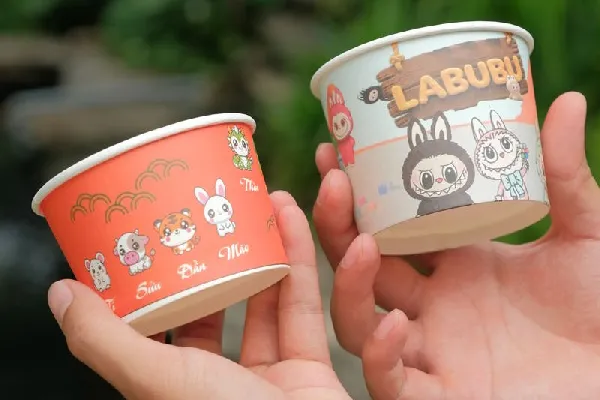
Paper cups can provide a practical alternative to conventional single-use plastic cups while offering excellent opportunities for branding and customization.
However, not every paper cup has exactly the same environmental characteristics.
The paperboard, coating, manufacturing process, transportation, usage, recycling infrastructure, and end-of-life treatment can all affect the overall environmental impact of a cup.
For businesses looking for more sustainable beverage packaging, understanding these factors is essential.
This guide explains what eco-friendly paper cups are, how they are made, which materials and coatings are available, how recyclable and compostable paper cups differ, and how businesses can select the right sustainable paper cup solution.
Eco-friendly paper cups are disposable beverage cups designed with environmental considerations in mind.
They are primarily made from paperboard and can be designed to reduce reliance on conventional plastic packaging through material selection, reduced plastic content, recyclable structures, compostable coatings, or other sustainability-focused manufacturing approaches.
However, the term "eco-friendly" should not automatically mean that every paper cup is biodegradable or compostable.
The environmental characteristics of a paper cup depend on its complete material structure and the waste-management system available after use.
Businesses should therefore evaluate the specific product rather than relying only on general environmental claims.
The demand for sustainable packaging has increased across the global food and beverage industry.
Coffee shops, restaurants, hotels, beverage chains, and takeaway businesses are looking for packaging that combines functionality with stronger environmental positioning.
Several factors are driving this change.
Plastic packaging has become a major environmental concern.
Paper-based packaging can help businesses reduce their dependence on conventional plastic cups and other disposable plastic products.
This is particularly relevant for takeaway businesses where large quantities of disposable beverage containers are used every day.
Customers increasingly pay attention to the packaging used by brands.
Using paper-based packaging can communicate a stronger commitment to responsible packaging and sustainability.
Packaging is visible to customers.
A well-designed custom printed paper cup can therefore combine practical beverage packaging with brand communication.
Businesses can use logos, colors, illustrations, messages, and other visual elements to communicate their brand identity.
Governments and markets in many regions are introducing measures to reduce single-use plastic waste.
As regulations and customer expectations evolve, businesses are increasingly evaluating alternatives to conventional plastic packaging.
There is no single characteristic that automatically makes a paper cup eco-friendly.
Instead, businesses should consider several factors.
Paper is a renewable material when sourced responsibly.
A higher proportion of paper-based material can reduce dependence on fossil-fuel-based plastics, although the complete product structure still needs to be considered.
The source of paperboard is an important consideration.
Businesses may ask manufacturers about the origin and specifications of the paperboard used in their cups and whether relevant responsible-sourcing certifications are available.
Some paper cups use plastic-based coatings to provide liquid resistance.
Reducing unnecessary plastic content can be an important part of a packaging sustainability strategy.
Some manufacturers offer cups using alternative barrier materials, including plant-based coatings such as PLA.
The environmental benefits of a particular coating depend on the product specification and the waste-management infrastructure available in the destination market.
A paper cup may be recyclable when suitable collection and processing facilities are available.
The cup's coating and material structure can affect whether it can be processed by a particular recycling system.
Some paper cups can be designed for composting under specific conditions.
However, compostable does not necessarily mean that the product will decompose quickly in a normal environment.
Businesses should verify the applicable certification and composting conditions before making compostability claims.
Material selection is one of the most important aspects of sustainable paper cup manufacturing.
A typical paper cup contains paperboard together with a barrier layer that prevents beverages from penetrating the paper.
The main material considerations include:
Paperboard
PE coating
PLA coating
Water-based or other alternative barrier technologies
Inks
Adhesives
Printing materials
The best option depends on the beverage application, required performance, target market, recycling infrastructure, and sustainability objectives.
One of the most common questions when selecting sustainable paper cups is the difference between PE and PLA coatings.
PE, or polyethylene, is commonly used as a moisture barrier in paper cups.
It provides effective leak resistance and helps protect the paperboard from liquid.
However, because PE is a conventional plastic material, it can make recycling or other end-of-life processing more complicated depending on the local waste-management system.
PLA is a plant-based bioplastic commonly produced from renewable resources such as corn starch or other plant-derived materials.
PLA can be used as a barrier coating for certain paper cup applications.
Under appropriate industrial composting conditions, PLA-based products may have different end-of-life characteristics from conventional PE-coated products.
However, businesses should not assume that every PLA-coated cup is automatically compostable everywhere.
The applicable certification and local waste-management infrastructure should always be considered.
Paper itself is a biodegradable material, but the complete paper cup may contain additional materials that affect decomposition.
For example, a paper cup with a conventional plastic lining may not behave in the same way as an uncoated paper product.
The rate and completeness of decomposition can depend on:
Paper composition
Coating material
Moisture
Temperature
Oxygen
Microbial activity
Waste-management conditions
Therefore, businesses should distinguish between the biodegradability of paper fibers and the environmental behavior of the complete finished cup.
Some paper cups can be recycled, but recyclability depends on both product design and available recycling infrastructure.
The paperboard must be compatible with the recycling process, while the barrier coating may need to be separated or processed using suitable technology.
For this reason, businesses should consider the recycling infrastructure in their target market before selecting a paper cup.
A cup described as recyclable should ideally be evaluated together with the actual collection and processing system available to consumers.
Eco-friendly and compostable are not interchangeable terms.
"Eco-friendly" is a broad term describing products designed with environmental considerations.
This may involve:
Paper-based materials
Reduced plastic
Responsible sourcing
Recyclability
Alternative coatings
Efficient manufacturing
Sustainable packaging strategies
Compostable cups are designed to break down under specified composting conditions.
The exact conditions may include industrial composting facilities rather than ordinary household environments.
Therefore, a compostable paper cup should be evaluated according to its certification and the composting infrastructure available in the target market.
Coffee shops are among the most common users of disposable paper cups.
A café may require several cup types depending on its menu.
Common sizes include:
8oz
12oz
16oz
22oz
The correct size depends on the beverage and serving style.
For hot beverages, businesses may also consider insulated structures such as double-wall paper cups, which can improve heat insulation and customer comfort.
Businesses can learn more about selecting the right sizes through the guide to Best Paper Cup Sizes for Coffee Shops.
Bubble tea stores often require larger cups because many beverages contain ice and toppings.
Common sizes include:
16oz
22oz
Businesses should consider the cup diameter, lid compatibility, wall structure, liquid resistance, and suitability for cold beverages.
Eco-friendly packaging strategies for bubble tea can also include paper straws and other paper-based products.
Restaurants and takeaway businesses use disposable cups for:
Coffee
Tea
Juice
Soft drinks
Iced beverages
Smoothies
Milk tea
Other takeaway drinks
For these businesses, packaging needs to balance environmental considerations with durability, cost, convenience, storage, and branding.
Choosing a complete paper-based packaging system can also help create a consistent customer experience.
Businesses can explore Paper Cups to review available paper cup solutions.
Sustainable packaging does not need to sacrifice branding.
Custom printing allows businesses to place their brand identity directly on takeaway cups.
A custom printed cup can include:
Logo
Brand colors
Product information
Promotional messages
QR codes
Social media information
Illustrations
Seasonal designs
For coffee shops and beverage brands, the cup becomes a mobile branding tool every time a customer carries a drink outside the store.
Businesses looking for branded packaging can explore Custom Printed Paper Cups.
Kraft paper cups have become strongly associated with natural and sustainable branding.
Their brown paper appearance can create a simple, natural, and premium visual identity.
Kraft cups are particularly popular among:
Specialty coffee shops
Organic food brands
Eco-conscious cafés
Boutique beverage businesses
Sustainable restaurants
However, the brown appearance alone does not determine the environmental performance of a cup.
Businesses should still evaluate the paper source, coating, manufacturing process, recyclability, and end-of-life characteristics.
Double-wall paper cups contain an additional paper layer around the cup body.
This structure can provide:
Better insulation
Improved grip
Increased structural strength
Reduced need for a separate sleeve
Premium appearance
For hot beverages, double-wall cups can be a practical option for businesses looking for both performance and sustainable paper-based packaging.
PaperGCO provides Double Wall Kraft Paper Cups as one option for businesses exploring this category.
Manufacturing has an important role in the sustainability of paper cups.
The production process can include:
Paperboard sourcing
Coating
Printing
Die cutting
Cup forming
Bottom sealing
Rim forming
Quality inspection
Packaging
Transportation
Manufacturers can improve resource efficiency through appropriate production planning, material utilization, quality control, and waste reduction.
Businesses looking for large-volume supply should therefore evaluate not only the final product but also the capabilities of the paper cup manufacturer.
Selecting the right manufacturer is important when sustainability is part of the purchasing strategy.
Businesses should consider the following factors.
Ask what type of paperboard and coating are used.
Where relevant, ask whether the paper, coating, or finished product has applicable environmental certifications.
Determine whether the product is compatible with the recycling infrastructure in the destination market.
If compostability is important, verify the actual certification and conditions required.
An environmentally preferable cup still needs to perform reliably.
The cup should provide appropriate:
Leak resistance
Structural strength
Heat resistance
Cold-drink performance
Lid compatibility
For branded products, printing quality should remain consistent throughout production.
The manufacturer should be capable of maintaining supply according to the customer's expected order volume.
A reliable manufacturer should have defined quality-control procedures for raw materials, printing, forming, sealing, and finished products.
The cheapest paper cup is not necessarily the most economical option.
Businesses should consider total procurement cost, including:
Unit price
Printing
Packaging
Shipping
Storage
Product waste
Leakage or quality problems
Minimum order quantity
Production lead time
A slightly higher-quality product may provide better overall value if it reduces operational problems and supports stronger brand positioning.
Eco-friendly cups are only one component of a broader sustainable F&B packaging strategy.
Businesses may also consider:
Paper straws
Paper bowls
Paper plates
Kraft paper bags
Sustainable food containers
Using complementary paper-based packaging can create a more consistent visual identity and sustainability message.
Businesses can explore the broader eco-friendly F&B packaging category to understand how paper cups fit into a larger sustainable packaging strategy.
Paper cups are often purchased together with drinking straws.
Replacing conventional plastic straws with paper alternatives can help businesses reduce the use of single-use plastic across beverage packaging.
For businesses serving coffee, juice, smoothies, bubble tea, and other takeaway beverages, cup and straw specifications should be considered together.
Explore Paper Straws and related paper-based packaging solutions when developing a complete beverage packaging strategy.
Restaurants and takeaway businesses may also require paper bowls for food products.
Using paper cups together with paper bowls can help create a consistent packaging system for:
Cafés
Restaurants
Catering businesses
Takeaway stores
Food delivery businesses
Events
This allows businesses to move beyond selecting an individual product and instead develop a broader paper-based packaging strategy.
Before ordering, businesses should define their requirements clearly.
Determine whether the cup will be used for:
Hot coffee
Tea
Iced coffee
Bubble tea
Juice
Soft drinks
Smoothies
Select sizes according to the menu and serving volume.
Choose between:
Single wall
Double wall
Ripple wall
depending on insulation, handling, and presentation requirements.
Determine whether conventional or alternative barrier technologies are appropriate for the product and target market.
Decide whether the business requires plain cups or custom printed cups.
Define whether the priority is:
Reduced plastic
Recyclability
Compostability
Responsible paper sourcing
Sustainable branding
A combination of these objectives
Consider how customers will dispose of the cup and whether suitable collection, recycling, or composting facilities exist.
Businesses should avoid several common mistakes.
Different materials and coatings can have significantly different environmental characteristics.
These terms describe different properties and should not be used interchangeably.
A product may have a theoretical recycling or composting pathway that is not available in the market where it is used.
Low-cost products may not always provide the best balance between quality, sustainability, and total procurement cost.
Businesses should confirm cup size, paperboard, coating, printing, wall structure, packaging, and other technical requirements before placing large orders.
PaperGCO provides paper-based packaging solutions for businesses looking for practical, customizable, and sustainability-oriented F&B packaging.
The product range includes paper cups and other paper packaging solutions for cafés, restaurants, beverage brands, takeaway businesses, catering companies, and distributors.
PaperGCO's product ecosystem includes:
Paper cups
Custom printed paper cups
Double-wall paper cups
Paper straws
Paper bowls
Paper bags
Businesses can visit the PaperGCO English website to explore available products and packaging solutions.
For businesses that require customized production, working with an experienced paper cup manufacturer can help coordinate materials, specifications, printing, production quantities, quality control, and delivery requirements.
If you are researching eco-friendly paper cups, the following PaperGCO resources can help you evaluate related products and packaging solutions:
Paper Cups – Explore paper cup products and applications.
Custom Printed Paper Cups – Explore branded and custom-printed cup options.
Double Wall Kraft Paper Cups – Explore insulated kraft paper cup solutions.
Best Paper Cup Sizes for Coffee Shops – Learn how to select suitable cup sizes.
Eco-Friendly Packaging – Understand sustainable packaging concepts and applications.
Paper Straws – Explore paper straws and related beverage packaging.
PaperGCO English Website – Explore PaperGCO's broader product range.
Eco-friendly paper cups are paper-based beverage cups designed with environmental considerations such as paper materials, reduced plastic content, recyclable structures, alternative coatings, responsible sourcing, or other sustainability-focused characteristics.
The paper portion of a paper cup is biodegradable, but the complete cup may contain coatings or other materials that affect decomposition. The actual behavior depends on the cup's materials and disposal conditions.
Some paper cups can be recycled, depending on their material structure, coating, local collection systems, and available recycling facilities.
PLA and PE have different material characteristics and end-of-life considerations. PLA is plant-based, while PE is a conventional plastic coating. The most appropriate option depends on the application, target market, certifications, and available waste-management infrastructure.
Some paper cups can be designed for composting under specified conditions. Businesses should verify applicable certifications and determine whether appropriate composting facilities are available in the target market.
Common sizes include 8oz, 12oz, 16oz, and 22oz, although available sizes depend on the manufacturer and product specification.
Kraft paper cups are paper-based products with a natural appearance often associated with sustainable branding. However, their overall environmental performance also depends on the coating, material sourcing, manufacturing process, and end-of-life treatment.
Yes. Eco-friendly paper cups can be customized with logos, brand colors, artwork, promotional messages, and other branding elements, depending on the manufacturer's printing capabilities.
Double-wall paper cups use more paper than single-wall cups but can provide better insulation and may reduce the need for a separate cup sleeve. Their overall environmental performance should be evaluated based on the complete product lifecycle.
Businesses should consider the beverage application, cup size, wall structure, paperboard, coating, printing, quality, recycling or composting options, certifications, supplier reliability, and total procurement cost.
Businesses are increasingly considering eco-friendly paper cups because of growing consumer expectations, plastic-reduction goals, sustainable branding, evolving packaging policies, and the need for practical takeaway beverage packaging.
Eco-friendly paper cups can be an important component of a more sustainable beverage packaging strategy for cafés, restaurants, coffee shops, bubble tea stores, catering businesses, and other F&B companies.
However, choosing a sustainable paper cup requires more than simply choosing a product made from paper.
Businesses should evaluate the complete product structure, including paperboard, coating, printing, manufacturing, transportation, use, recycling, composting, and end-of-life management.
The most suitable solution depends on the specific beverage application, target market, available waste-management infrastructure, sustainability objectives, and commercial requirements.
By working with an experienced paper cup manufacturer and selecting appropriate materials, structures, sizes, and printing options, businesses can create packaging that balances functionality, branding, cost, and environmental considerations.
PaperGCO provides a range of paper-based F&B packaging solutions for businesses exploring paper cups and broader sustainable packaging strategies.



VNtech Group Joint Stock Company
ĐKKD: 0109896881 do sở KH&ĐT HÀ NỘI cấp ngày: 24/01/2022
Đăng ký lần đầu, ngày 24 tháng 01 năm 2022.
Connect