
A reliable paper cup manufacturer plays an important role in the supply chain for coffee shops, restaurants, beverage brands, catering businesses, distributors, and foodservice companies.
Paper cups may appear to be simple disposable products, but manufacturing them consistently requires the right combination of paperboard, coating, printing, forming technology, sealing, quality control, and production management.
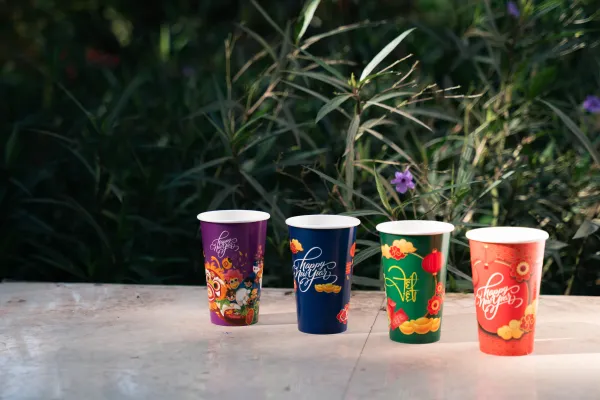
For businesses purchasing paper cups in volume, choosing the right manufacturer is therefore about more than finding the lowest price. Buyers should consider product specifications, manufacturing capabilities, customization, food-contact requirements, production capacity, minimum order quantities, lead times, quality consistency, and supply reliability.
This guide explains the key factors businesses should understand when evaluating a paper cup manufacturer.
A paper cup manufacturer is a company that produces paper cups through a series of manufacturing processes, from paperboard preparation and printing to forming, sealing, inspection, and packaging.
Depending on the manufacturer's capabilities, the production process may include:
Paperboard sourcing
Paperboard coating
Printing
Die cutting
Cup forming
Side seam sealing
Bottom forming and sealing
Rim curling
Quality inspection
Packaging
Finished-product storage and shipment
Manufacturers may produce standard paper cups or provide custom paper cup manufacturing based on a customer's specifications.
The difference between a manufacturer and a general paper cup supplier is important. A supplier may distribute products manufactured by another company, while a manufacturer controls some or all of the production process.
The quality and consistency of disposable cups can directly affect the customer experience.
A professional manufacturer can provide more control over product specifications and production standards.
Commercial F&B businesses often require thousands or millions of cups with consistent dimensions, printing, structure, and sealing.
Manufacturing controls help ensure that production remains within defined specifications.
Businesses can develop paper cups according to their brand and application requirements.
Custom manufacturing may include:
Custom cup sizes
Custom printing
Brand logos
Custom colors
Different paperboard specifications
Single-wall cups
Double-wall cups
Ripple-wall cups
Custom packaging
A manufacturer with suitable production capacity can support both regular orders and larger seasonal requirements.
This is particularly important for growing beverage brands and distributors that need a stable supply over time.
A professional manufacturer should have quality-control procedures throughout the production process rather than relying only on final inspection.
Quality checks may cover raw materials, printing, dimensions, forming, sealing, appearance, and finished-product packaging.
Understanding the basic manufacturing process helps buyers evaluate the capabilities of a potential supplier.
Paperboard is selected according to the intended application and required cup performance.
The paper specification can influence cup rigidity, appearance, printability, and overall performance.
Paperboard used for liquid applications commonly requires a barrier coating.
The coating helps prevent liquid from penetrating the paper structure and contributes to leakage resistance.
Depending on the product and manufacturing technology, different coating systems may be available.
For custom paper cups, artwork is printed onto the paperboard before the cup blanks are formed.
Important printing considerations include:
Color consistency
Logo clarity
Artwork registration
Print coverage
Surface appearance
Compatibility between ink and substrate
A manufacturer's printing capability can have a major effect on the appearance of branded cups.
Printed paperboard is cut into cup fan blanks according to the required cup dimensions.
The accuracy of the cutting process affects the subsequent forming process and final cup dimensions.
The printed cup blank is formed into a cylindrical or tapered cup shape.
The side seam must be properly sealed to maintain the structural integrity of the cup.
The bottom section is attached and sealed to the cup body.
Reliable bottom sealing is essential for preventing leakage during normal use.
The upper edge of the cup is formed into a smooth and consistent rim.
The rim also needs to be compatible with the intended lid where applicable.
Finished cups are inspected according to defined quality requirements before being packed and prepared for shipment.
A paper cup manufacturer may produce different cup structures depending on the intended application.
Single-wall cups are commonly used for coffee, tea, water, soft drinks, and other takeaway beverages.
They can provide a lightweight and economical packaging solution.
Double-wall cups contain an additional paper layer that provides improved insulation and a more substantial feel.
They are commonly used for hot beverages.
Ripple-wall cups use a textured outer layer that can provide additional insulation and a distinctive appearance.
They are often used for premium takeaway coffee and other hot drinks.
Cold beverage cups can be designed for applications such as:
Soft drinks
Juice
Iced coffee
Milk tea
Smoothies
Other cold beverages
The appropriate paper and coating structure depends on the beverage and intended usage conditions.
For branded F&B businesses, custom paper cup manufacturing can turn disposable packaging into an important part of the customer experience.
A manufacturer can produce cups according to specific branding and technical requirements.
Businesses can print their logo and brand identity directly onto the cup.
This creates a consistent visual identity across takeaway orders and customer-facing packaging.
In addition to logos, businesses can use illustrations, product information, promotional graphics, patterns, and other artwork.
The design should be prepared according to the manufacturer's printing specifications.
Different beverage products require different capacities.
Manufacturers may support multiple cup sizes depending on their production equipment and tooling.
For wholesale and distribution, businesses may also require customized outer packaging, cartons, or product labeling.
Material selection is one of the most important aspects of paper cup manufacturing.
A paper cup normally consists of paperboard combined with a barrier layer appropriate for its intended application.
When evaluating materials, buyers should consider:
Paperboard weight
Paper stiffness
Coating type
Beverage temperature
Liquid characteristics
Usage duration
Leakage resistance
Printing requirements
End-of-life considerations
The appropriate specification depends on the intended application rather than simply choosing the thickest or most expensive material.
Because paper cups are commonly used for beverages and foodservice applications, material suitability is an important consideration.
Businesses should ask manufacturers about the materials used and the applicable food-contact requirements for the target market.
Important documentation and quality information may include:
Material specifications
Supplier information
Applicable food-contact compliance
Production controls
Quality inspection procedures
Product specifications
Requirements can vary depending on the destination market and intended use, so buyers should confirm the relevant requirements for their specific application.
Printing is especially important for businesses using cups as part of their branding.
A paper cup manufacturer should be able to maintain consistent printing throughout production.
Buyers should evaluate:
Color accuracy
Logo sharpness
Artwork alignment
Print consistency
Ink adhesion
Overall appearance
Requesting a physical production sample can provide a better indication of final print quality than reviewing digital artwork alone.
Quality control should be integrated throughout the manufacturing process.
A professional manufacturer may inspect:
Paperboard and coating materials should meet the agreed specifications before entering production.
Printed sheets should be checked for color, artwork alignment, clarity, and defects.
Finished cups should maintain consistent dimensions within the agreed tolerances.
Side seams and bottom seals should be checked for structural integrity and leakage resistance.
Final inspection may cover appearance, cleanliness, packaging, quantity, and other customer-specific requirements.
Consistent quality control becomes increasingly important as order volume increases.
Minimum order quantity varies between manufacturers.
MOQ can depend on:
Cup size
Paper specification
Printing requirements
Number of colors
Custom artwork
Production setup
Packaging requirements
Total order volume
Businesses should ask for MOQ information before finalizing artwork or production specifications.
For new brands, it can also be useful to understand whether the manufacturer provides sampling or small-volume development options.
Production lead time depends on the product specification and production schedule.
Custom printed paper cups may require additional time for:
Artwork preparation
Artwork approval
Printing setup
Material preparation
Production
Quality inspection
Packaging
Delivery
Businesses should plan orders sufficiently in advance, particularly before seasonal campaigns or periods of increased beverage demand.
When comparing manufacturers, avoid evaluating suppliers solely by their quoted unit price.
A more complete evaluation should consider:
| Evaluation Factor | What to Check |
|---|---|
| Materials | Paperboard and coating specifications |
| Manufacturing | Production equipment and capabilities |
| Printing | Quality and consistency |
| Customization | Sizes, designs, structures, packaging |
| Quality Control | Inspection procedures |
| MOQ | Minimum production quantity |
| Lead Time | Sampling and production schedules |
| Capacity | Ability to handle regular and large orders |
| Communication | Responsiveness and technical support |
| Supply Reliability | Ability to maintain consistent production |
The right manufacturer should be able to meet both the technical and commercial requirements of the project.
The terms "manufacturer" and "supplier" are sometimes used interchangeably, but they can describe different business models.
A manufacturer produces the paper cups or controls the manufacturing process.
A supplier may manufacture the products directly, or may source finished products from another factory and resell them.
For buyers who need customized products, working directly with a manufacturer can provide advantages such as:
Direct technical communication
Greater production visibility
More control over specifications
Easier customization
Better coordination of quality issues
However, the best sourcing model depends on the buyer's volume, requirements, market, and procurement strategy.
Businesses can source paper cups from domestic or international manufacturers.
Domestic manufacturing can offer advantages related to communication, logistics, quality coordination, and supply-chain simplicity.
International manufacturing may provide access to different production capabilities, larger production volumes, or specific materials and technologies.
The correct decision should consider the complete procurement cost, including:
Product price
Transportation
Import costs
Warehousing
Inventory
Lead time
Quality control
Communication
Supply risk
A lower factory price does not automatically result in a lower total cost.
Sustainability is becoming an increasingly important consideration for F&B packaging.
However, "eco-friendly" should not be treated as a single material characteristic.
Businesses should evaluate the complete packaging lifecycle, including:
Raw material sourcing
Paperboard production
Coating
Manufacturing efficiency
Packaging
Transportation
Use
Collection
End-of-life management
Businesses seeking sustainable packaging should discuss material specifications and environmental objectives directly with their manufacturer.
Paper cups can also be considered together with other eco-friendly F&B packaging products to create a more consistent packaging strategy.
Paper cups are used across a wide range of food and beverage businesses.
Common applications include:
Coffee shops
Restaurants
Hotels
Catering companies
Bakeries
Bubble tea stores
Juice shops
Fast-food businesses
Events
Corporate offices
Foodservice distributors
Takeaway beverage brands
Different applications may require different cup sizes, structures, materials, printing specifications, and packaging formats.
Businesses planning a custom paper cup project can prepare the following information before contacting a manufacturer:
Beverage type
Hot or cold application
Required cup capacity
Cup structure
Artwork or logo
Expected order quantity
Target delivery date
Packaging requirements
Required material specifications
Destination market
Providing clear information allows the manufacturer to recommend an appropriate specification and provide a more accurate quotation.
PaperGCO provides paper-based food and beverage packaging solutions for businesses looking for reliable and customizable packaging products.
For companies sourcing paper cups, the manufacturing discussion can cover important factors such as cup specifications, materials, printing, customization, order quantities, packaging, and delivery requirements.
Whether you are a coffee brand, restaurant, beverage company, distributor, catering business, or foodservice operator, selecting a manufacturer that understands both the technical and commercial requirements of your project can help create a more reliable packaging supply chain.
PaperGCO can support businesses exploring paper cup manufacturing and related paper-based F&B packaging solutions.
If you are researching paper cup manufacturing, exploring related packaging categories can help you develop a more complete foodservice packaging strategy.
Explore Paper Cups for information about paper cup products and applications.
Learn more about Eco-Friendly F&B Packaging when sustainability is an important part of your packaging strategy.
You can also explore Paper Bowls and Paper Straws for other paper-based foodservice packaging products.
A paper cup manufacturer produces paper cups through processes such as paperboard preparation, coating, printing, die cutting, cup forming, sealing, inspection, and packaging.
Yes. Depending on the manufacturer's capabilities, custom paper cups can be produced with logos, artwork, colors, different sizes, and customized packaging.
Paper cups are generally made from paperboard combined with a barrier coating suitable for the intended beverage application. The exact material specification depends on the product requirements.
A manufacturer produces the cups or controls the manufacturing process, while a supplier may manufacture products directly or source finished cups from another factory. Buyers should confirm the actual production model when evaluating a supplier.
MOQ depends on the cup size, paper specification, printing requirements, production setup, packaging, and manufacturer. Buyers should confirm MOQ before starting production.
Lead time depends on the product specification, artwork approval, printing setup, production schedule, quality inspection, packaging, and delivery requirements.
Evaluate the manufacturer's materials, production capabilities, printing quality, customization options, quality-control procedures, MOQ, lead time, production capacity, communication, and supply reliability rather than comparing price alone.
The sustainability of a paper cup depends on its materials, coating, manufacturing process, transportation, use, collection, and end-of-life management. A complete lifecycle assessment provides a more meaningful evaluation than a single environmental claim.
PaperGCO provides paper-based F&B packaging solutions and can support businesses exploring customized paper cup requirements, including product specifications, printing, materials, quantities, packaging, and related manufacturing needs.
Choosing the right paper cup manufacturer is an important decision for businesses that depend on consistent, high-quality beverage packaging.
A capable manufacturer should be able to provide appropriate materials, reliable production, consistent printing, effective sealing, quality control, customization options, and dependable supply.
Businesses should evaluate manufacturers based on the complete value they provide rather than focusing only on the lowest unit price.
By clearly defining product requirements, requesting samples, reviewing manufacturing capabilities, confirming MOQ and lead times, and discussing quality standards, buyers can build a stronger foundation for a long-term paper cup supply partnership.
For businesses looking for customized, reliable, and responsibly developed F&B packaging, working directly with an experienced paper cup manufacturer can provide greater control over both product quality and brand presentation.



VNtech Group Joint Stock Company
ĐKKD: 0109896881 do sở KH&ĐT HÀ NỘI cấp ngày: 24/01/2022
Đăng ký lần đầu, ngày 24 tháng 01 năm 2022.
Connect