Vietnam has become an important manufacturing and sourcing destination for businesses looking for reliable food and beverage packaging.
For coffee shops, beverage brands, restaurants, distributors, catering companies, and foodservice businesses, working with a paper cup factory in Vietnam can provide access to custom paper cup production, competitive manufacturing, flexible specifications, and an established packaging supply chain.
However, choosing a factory should involve more than comparing the quoted price per cup.
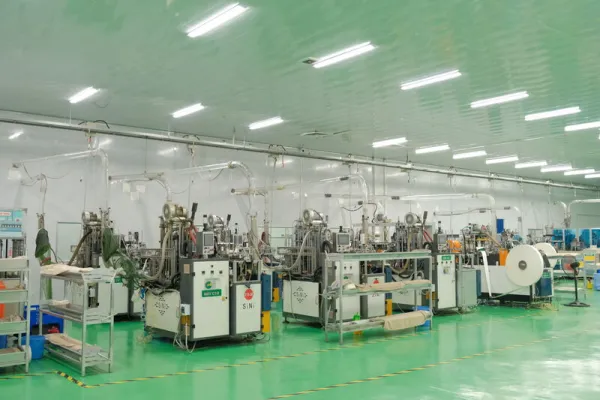
Buyers should evaluate manufacturing capabilities, paper materials, coating, printing quality, cup structures, production capacity, quality control, minimum order quantities, lead times, packaging, and logistics.
This guide explains what businesses should know when sourcing paper cups from a factory in Vietnam.
A paper cup factory in Vietnam is a manufacturing facility that produces paper cups for domestic and international customers.
Depending on its production capabilities, a factory may handle multiple stages of manufacturing, including:
Paperboard preparation
Paper coating
Printing
Die cutting
Cup forming
Side seam sealing
Bottom sealing
Rim forming
Quality inspection
Packaging
Finished-product storage
Some factories manufacture standard paper cups, while others provide custom paper cup manufacturing based on customer specifications.
A factory may also support private-label or branded packaging projects where customers provide artwork, branding requirements, packaging specifications, or other product requirements.
Vietnam has developed a strong manufacturing ecosystem for foodservice and consumer packaging.
For international buyers, sourcing paper cups from Vietnam can provide several potential advantages.
Vietnam offers an established manufacturing workforce and supply chain for paper and packaging products.
Depending on product specifications and order volume, manufacturers can provide competitive production costs.
However, buyers should evaluate total procurement costs rather than comparing factory prices alone.
Vietnamese factories can support custom packaging projects for businesses that require branded paper cups.
Customization can include:
Cup sizes
Cup structures
Paper specifications
Printing
Brand logos
Artwork
Colors
Packaging
Cartons
Product labeling
Factories serving international customers may have experience preparing products for overseas shipment.
This can be important for distributors, importers, restaurant groups, beverage brands, and packaging companies sourcing paper cups from Vietnam.
Vietnam has a growing ecosystem of companies involved in paper, printing, packaging, logistics, and foodservice products.
This creates opportunities for businesses looking to develop longer-term packaging supply relationships.
The manufacturing process can vary between factories, but a typical paper cup production process includes several key stages.
The factory selects paperboard according to the required cup size, structure, beverage application, and performance requirements.
Paperboard specifications can affect:
Cup stiffness
Appearance
Print quality
Forming performance
Overall product performance
Paper used for liquid-containing applications generally requires a suitable barrier layer.
The coating helps reduce liquid penetration and contributes to the cup's resistance to leakage.
The appropriate coating depends on the intended application and product specification.
For custom printed cups, artwork is printed onto the paperboard before the cup is formed.
Printing quality can affect the appearance of the final product, especially when the cup is being used as part of a brand's visual identity.
Important factors include:
Color consistency
Logo clarity
Artwork positioning
Print registration
Surface appearance
Ink performance
Printed paperboard is cut into cup blanks.
Accurate die cutting helps ensure that the blanks can be formed consistently during the next manufacturing stage.
The paper blank is formed into the required cup shape.
The side seam is sealed to create the body of the cup.
The bottom section is attached and sealed to the cup body.
This is an important manufacturing stage because the bottom seal needs to provide sufficient integrity for the intended application.
The upper edge of the cup is formed into a smooth and consistent rim.
The finished rim may also need to match the specifications of the intended cup lid.
Finished cups are inspected according to the manufacturer's quality-control procedures.
Products that meet the required specifications are then packaged for storage and shipment.
A paper cup factory may manufacture different cup structures depending on its machinery and production capabilities.
Single-wall paper cups are commonly used for:
Coffee
Tea
Water
Soft drinks
Takeaway beverages
They can provide a lightweight and economical packaging option.
Double-wall paper cups contain an additional outer paper layer.
They can provide improved insulation and a more substantial feel when holding hot beverages.
Ripple-wall cups feature a textured outer layer.
This structure can provide additional insulation while also creating a distinctive premium appearance.
Cold beverage cups are designed for applications such as:
Iced coffee
Milk tea
Juice
Soft drinks
Smoothies
Other cold beverages
The appropriate material and coating should be selected according to the intended beverage and usage conditions.
Custom manufacturing is one of the main reasons businesses choose to work directly with a paper cup factory.
A custom project can be developed around a company's brand identity and product requirements.
Businesses can print their:
Logo
Brand colors
Product graphics
Promotional messages
Illustrations
Patterns
Other marketing artwork
This allows the paper cup to become part of the customer's overall packaging and branding strategy.
Different beverages may require different cup capacities.
A factory can recommend suitable production specifications based on the required volume and intended application.
Depending on factory capabilities, buyers may select from structures such as:
Single-wall
Double-wall
Ripple-wall
Hot beverage cups
Cold beverage cups
For wholesale and distribution projects, customized packaging can also be developed.
This may include:
Inner packaging
Cartons
Product labels
Shipping cartons
Private-label packaging
Material selection should be discussed carefully when sourcing paper cups.
The appropriate paper specification depends on factors such as:
Beverage temperature
Beverage type
Cup size
Required rigidity
Expected usage period
Printing requirements
Coating requirements
Intended market
The goal is not necessarily to use the thickest paper, but to select a specification that provides the required performance while maintaining appropriate production and cost efficiency.
Paper cups intended for food and beverage applications need to be manufactured using materials appropriate for their intended use.
International buyers should discuss food-contact requirements with the factory before production.
Depending on the target market, buyers may request information such as:
Material specifications
Paperboard information
Coating specifications
Food-contact documentation
Quality-control procedures
Product specifications
Requirements can differ between markets, so manufacturers and buyers should confirm the applicable requirements for the destination country.
Quality control is one of the most important factors when selecting a manufacturing partner.
A reliable factory should have procedures covering different stages of production.
Paperboard and coating materials should be checked against agreed specifications.
Printed materials can be checked for:
Color consistency
Artwork accuracy
Printing defects
Logo clarity
Positioning
Finished cups should maintain consistent dimensions within the agreed tolerances.
Side seams and bottom seals should be inspected to help identify potential leakage or structural problems.
Final inspection may cover:
Appearance
Dimensions
Cleanliness
Quantity
Packaging
Product labeling
For large-volume orders, consistent quality control becomes particularly important.
Minimum order quantity varies by factory and product.
MOQ may depend on:
Cup size
Paper specification
Printing requirements
Number of colors
Custom artwork
Production setup
Packaging
Order volume
Businesses should confirm MOQ before approving final artwork and production specifications.
For new brands, it can also be useful to ask whether the factory provides product samples before placing a full production order.
Production capacity is particularly important for distributors and growing beverage brands.
A factory should be able to communicate its production capabilities clearly.
Buyers may want to ask about:
Daily production capacity
Monthly production capacity
Available cup sizes
Printing capacity
Number of production lines
Production scheduling
Peak-season capacity
Lead times
The factory's capacity should be evaluated against both current demand and expected future growth.
Production lead time depends on the product and order requirements.
A custom paper cup project may include:
Product specification
Artwork preparation
Sample development
Artwork approval
Material preparation
Printing
Cup forming
Quality inspection
Packaging
Shipment
International buyers should also consider transportation time from Vietnam to the destination market.
Planning production in advance can help reduce supply disruptions, especially during seasonal demand peaks.
Buying directly from a factory can provide more direct communication regarding specifications and production.
The sourcing process can generally follow these steps:
Specify:
Cup type
Cup size
Beverage application
Paper specification
Printing
Quantity
Packaging
Destination market
Samples allow buyers to evaluate:
Cup structure
Printing quality
Material
Dimensions
Appearance
General product performance
Before production, both parties should agree on the product specifications and quality requirements.
The quotation should clearly identify the product specification, quantity, packaging, and other relevant commercial terms.
Once the order is confirmed, the factory begins production according to the agreed specifications.
Quality inspection should be performed according to the agreed requirements.
Finished products are packaged and prepared for domestic or international transportation.
When sourcing from Vietnam, buyers may encounter both factories and trading companies.
A factory directly controls manufacturing operations.
A trading company may source products from one or more factories and provide additional procurement or export services.
Neither model is automatically better for every buyer.
The appropriate sourcing partner depends on:
Order volume
Product customization
Technical requirements
Required communication
Quality-control expectations
Logistics requirements
Procurement strategy
For highly customized products, direct factory communication can be particularly useful.
Before placing an order, buyers should ask relevant questions about the factory and product.
Important questions include:
What paper specifications are available?
What cup sizes can you produce?
Do you manufacture custom printed paper cups?
What cup structures are available?
What is the MOQ?
What is the normal production lead time?
What quality-control procedures are used?
Can you provide product samples?
What packaging options are available?
Can you support international shipments?
What documentation is available for the target market?
Can you support long-term recurring orders?
Clear answers to these questions can help buyers compare factories more effectively.
The factory unit price is only one component of the total procurement cost.
Businesses should consider:
Product cost
Printing cost
Packaging
Tooling or setup where applicable
Domestic transportation
International freight
Import duties
Warehousing
Inventory costs
Quality inspection
Delivery time
Potential supply-chain risks
A factory with a slightly higher unit price may provide a lower overall procurement cost if it offers better quality, fewer defects, reliable delivery, and efficient logistics.
Vietnamese paper cup factories may serve both domestic and international markets.
For export orders, buyers should consider:
Destination country
Product requirements
Packaging requirements
Shipping method
Export documentation
Import requirements
Delivery schedule
Incoterms where applicable
International buyers should discuss these requirements with the factory and logistics partners before confirming the order.
Sustainability is increasingly important for food and beverage packaging.
However, an environmentally responsible packaging strategy should consider the entire product lifecycle rather than focusing on a single material characteristic.
Relevant factors can include:
Paper sourcing
Material efficiency
Coating
Manufacturing efficiency
Packaging
Transportation
Product use
Collection
End-of-life management
Businesses should discuss sustainability objectives directly with the manufacturer and evaluate specific material and production information rather than relying only on general environmental claims.
Vietnam-made paper cups can be used across many foodservice applications, including:
Coffee shops
Restaurants
Hotels
Bubble tea stores
Juice shops
Bakeries
Fast-food businesses
Catering companies
Events
Corporate offices
Beverage distributors
Foodservice suppliers
Takeaway beverage brands
Different applications may require different cup structures, sizes, materials, printing, and packaging.
PaperGCO provides paper-based food and beverage packaging solutions for businesses looking for reliable and customizable products.
For companies sourcing paper cups from Vietnam, product discussions can cover important requirements such as:
Cup specifications
Paper materials
Cup structures
Custom printing
Product quantities
Packaging
Quality requirements
Delivery requirements
PaperGCO can work with businesses that need paper cups for coffee, beverages, restaurants, foodservice, distribution, and other commercial applications.
Choosing a manufacturing partner with a clear understanding of product specifications, quality requirements, branding, and supply needs can help businesses establish a more reliable paper cup sourcing strategy.
If you are researching paper cup manufacturing in Vietnam, you can explore PaperGCO's paper cup products and related F&B packaging solutions.
Paper Cups:
https://papergco.com/paper-cups.html
Custom Printed Paper Cups:
https://papergco.com/custom-printed-paper-cups.html
Plain Paper Cups 12oz, 16oz, 22oz:
https://papergco.com/plain-paper-cups-12oz-16oz-22oz.html
Double-Wall Kraft Paper Cups:
https://papergco.com/double-wall-kraft-paper-cups.html
Double-Layer Kraft Paper Cup:
https://papergco.com/double-layer-kraft-paper-cup.html
2PE Cold Cups:
https://papergco.com/2pe-cold-cup.html
1PE Paper Cups:
https://papergco.com/1pe-paper-cup.html
You can also explore related paper packaging products:
Paper Bowls:
https://papergco.com/bowl-paper-bowl.html
Kraft Paper Bowls:
https://papergco.com/kraft-paper-bowls.html
Paper Straws:
https://papergco.com/paper-straws.html
Paper Bags:
https://papergco.com/paper-bags.html
A paper cup factory in Vietnam is a manufacturing facility that produces paper cups through processes such as paper preparation, coating, printing, die cutting, forming, sealing, inspection, and packaging.
Yes. Depending on the factory's capabilities, businesses can order custom paper cups with specific sizes, structures, paper specifications, logos, artwork, colors, printing, and packaging.
Vietnam offers an established manufacturing and packaging supply chain, competitive production capabilities, custom manufacturing options, and access to international logistics networks.
Depending on the factory, production may include single-wall, double-wall, ripple-wall, hot beverage, cold beverage, plain, and custom printed paper cups.
MOQ varies according to the factory, cup size, material, printing, customization, production setup, packaging, and order quantity. Buyers should confirm the MOQ for their specific product.
Yes. Custom printed paper cups can be produced with logos, brand colors, artwork, promotional graphics, and other branding elements depending on the factory's printing capabilities.
Production time depends on product specifications, artwork approval, material preparation, production scheduling, quality inspection, packaging, and shipment requirements.
Evaluate the factory's manufacturing capabilities, materials, printing quality, production capacity, quality-control procedures, MOQ, lead time, samples, communication, packaging, and ability to meet your target-market requirements.
Factories serving international customers may support export orders, but buyers should confirm the factory's export capabilities, documentation, packaging, shipping arrangements, and destination-market requirements.
Yes. Paper cups manufactured in Vietnam can be used for coffee shops, restaurants, bubble tea stores, beverage brands, catering businesses, distributors, and many other foodservice applications, provided the selected product specifications are appropriate for the intended use.
Choosing the right paper cup factory in Vietnam can help businesses establish a reliable source of beverage packaging while maintaining control over product specifications, branding, quality, and supply requirements.
A suitable factory should provide more than competitive pricing. Buyers should evaluate materials, manufacturing capabilities, custom printing, cup structures, quality control, production capacity, MOQ, lead time, packaging, and logistics.
For international sourcing projects, businesses should also consider the complete cost of procurement, including transportation, import requirements, warehousing, and delivery.
By defining product requirements clearly, requesting samples, evaluating factory capabilities, confirming quality standards, and planning production carefully, businesses can build a stronger and more reliable paper cup supply chain in Vietnam.
For companies looking for customized paper cups and related F&B packaging solutions, working with an experienced Vietnam-based manufacturing partner can provide a practical foundation for long-term sourcing and brand development.




VNtech Group Joint Stock Company
ĐKKD: 0109896881 do sở KH&ĐT HÀ NỘI cấp ngày: 24/01/2022
Đăng ký lần đầu, ngày 24 tháng 01 năm 2022.
Connect